
Space After the SpaceX IPO
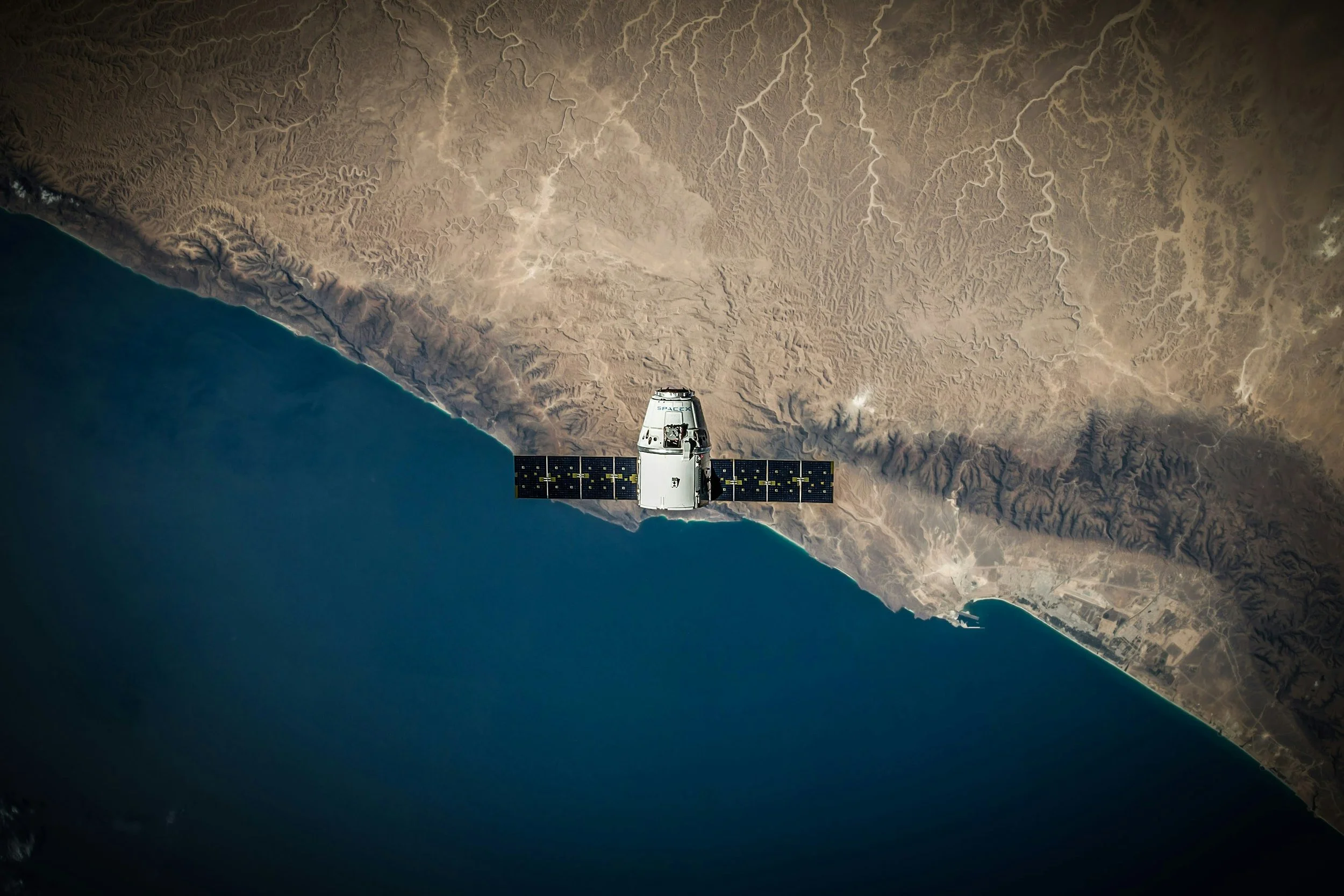
"Space is no longer speculative. After the SpaceX IPO filing, it is a procurement category with a public-market anchor, a defense budget behind it, and identifiable winners by sub-sector. Here is where I think the capital is going next."
Edoardo Zarghetta, Managing Partner, IPO CLUB
Where Capital Is Going After SpaceX
SpaceX's confidential IPO filing in April 2026, reportedly targeting a $1.75 trillion valuation, is the largest single event in the history of the space sector. It does three things at once: it validates space as a public-market category, it creates an instant comparable for everything else flying, and it sets a benchmark that no other space company can match without redefining what winning looks like.
The follow-on effect is already visible in the private sector. Investors who held SpaceX through tender offers will rotate proceeds into other space names. Founders pitching today face higher expectations on revenue, defense procurement traction, and exit math. Sub-sectors that looked speculative two years ago are now standard line items in defense budgets. What follows is a tour of the companies in our pipeline and a few outside it, grouped by how they make money.
Satellite Infrastructure and Operations
Loft Orbital, an existing America 2030 position, is the clearest example of the satellite-as-a-service model maturing. The Series C closed at $170 million in late 2025. Loft owns the satellites and hosts customer payloads, billing for mission outcomes rather than hardware. The January 2026 prime contractor selection on France's DESIR program, a roughly €50 million sovereign synthetic aperture radar demonstration with Thales Alenia Space and TEKEVER France, is the kind of allied-government anchor that drives multi-year visibility and reinforces the dual-use thesis.
D-Orbit, the Como-based in-space logistics company, closed the first tranche of its Series D in January 2026 with Azimut Group at $128 million, comprising $53 million in new equity and a $75 million secondary buyout. The 2025 acquisition of Italian Earth observation firm Planetek added analytics and AI-powered data processing in orbit to a business that began as a satellite carrier provider. D-Orbit sits in the same satellite deployment and servicing layer as Loft but with a heavier European customer base.
CesiumAstro closed a $470 million Series C in February 2026 at a $765 million post-money valuation, combining $270 million in equity led by Trousdale Ventures with $200 million in EXIM-backed debt financing. The company supplies phased-array antennas and active communication payloads to satellite manufacturers and primes. The growth path is reshoring: a 270,000-square-foot Texas manufacturing facility funded in part through the Make More in America initiative.
Kepler Communications, the Toronto-based optical relay constellation operator, launched its Tranche 1 of ten optical relay satellites on a SpaceX Falcon 9 in January 2026 and commissioned what it describes as the first commercially operational distributed orbital computing network. Forty NVIDIA Jetson Orin modules now run across the constellation, interconnected by optical inter-satellite links. The 2023 Series C raised $92 million; no further public round has been disclosed.
ReOrbit is a Finnish space technology company manufacturing sovereign satellites and connected systems for national security. Software-defined satellite platform with hardware-agnostic approach. Products: Silta (secure satellite communications) and Ukko (intelligence/surveillance). 2024 revenue $5.2M. Customer contracts include GEO communications satellite for Malaysia's Uzma Berhad and MoU with India's Ananth Technologies.
Atmos Space Cargo is a European orbital transport company developing reentry vehicles for cargo return from space. Series A capital funds a three-vehicle operational campaign establishing Europe's first routine orbital return infrastructure. Initial customer base in life sciences research and pharmaceutical applications.
York Space (January IPO, $629 million gross proceeds). York designs, manufactures and operates satellites, primarily for the US SDA (Space Development Agency) for use in the Proliferated Warfighter Space Architecture (PWSA), which is a large constellation of LEO satellites for missile tracking and tactical data relay. While the company’s products are dual use, its primary customers are defense- and intelligence-related at the moment. It had $543 million of backlog at 12/31/25 (Company SEC Filings).
Earth Observation and Data
SkyFi runs the asset-light side of Earth observation. The Austin-based marketplace aggregates imagery from over fifty suppliers, including Vantor (ex-Maxar), ICEYE, and Planet, across optical, SAR, hyperspectral, and aerial. The Series A closed in January 2026 at $12.7 million, bringing total raised to $28.3 million, led by Buoyant Ventures and IronGate Capital. NATO DIANA selection for 2026 validates the dual-use case. Customer diversification across defense, energy, agriculture, finance, and infrastructure, paired with marketplace economics, makes SkyFi the cleanest pure-software story in our space coverage.
Albedo takes the opposite approach: vertically integrated very-low-Earth-orbit satellites operating at around 250 km altitude to deliver ten-centimeter resolution. The Series A in early 2024 raised $35 million for a total of $97 million, led by Standard Investments. Albedo is the first commercial company licensed by NOAA for ten-centimeter imagery. Customer mix spans the US Air Force, civil, and commercial; competitors are the legacy primes for sub-meter optical work.
Hawkeye360 (May IPO, ~$416 million gross proceeds). Hawkeye provides space-enabled, end-to-end radio frequency signals intelligence to the US government and its allies. It had $285 million of funded backlog at 3/31/26 (Company SEC filings).
In-Space Manufacturing and Novel Concepts
Varda manufactures pharmaceuticals in microgravity and returns them to Earth via reentry capsules. The Series D closed in January 2026 at $250 million, bringing total raised to $578 million at a $1.6 billion post-money valuation, with Founders Fund, General Catalyst, Khosla Ventures, and Valor Equity Partners participating. The case is binary: scale the manufacturing-on-orbit model into recurring pharmaceutical revenue, or remain a defense-funded reentry technology demonstrator. The capital backing argues for the former.
Reflect Orbital is building a constellation of mirrored satellites to reflect sunlight onto specific terrestrial points, extending solar farm hours and providing illumination for disaster response and defense. The first satellite, Eärendil-1, is targeted for mid-2026 launch on SpaceX, pending FCC approval. The Series A in May 2025 raised $20 million, led by Lux Capital. The American Astronomical Society filed a petition to deny in March 2026, and DarkSky International classified the satellite as Risk Group 3. Regulatory path uncertainty is the principal risk; the upside is a category-defining position if the licensing clears.
Star Catcher, Jacksonville-based and founded in 2024, is building a space-based energy grid to wirelessly transmit concentrated solar energy to satellite arrays. Pre-revenue, novel concept, $12.25 million seed. The thesis is asymmetric: if the engineering works, every satellite operator becomes a customer; if it doesn't, the round is written off. Low entry valuation, high optionality.
ODIN Space sells sub-centimeter orbital debris detection sensors that act as black boxes for spacecraft. The first sensor demonstrated on D-Orbit's ION satellite in 2023, launched via SpaceX. The seed round in December 2025 raised $3 million for a total of $3.81 million, led by Steel Atlas. A December 2025 partnership with Arkisys enables the first collision-specific satellite insurance products. London-based, dual-use, very early stage, and our first test case for selective Seed-stage participation outside the Series B-plus default.
Space Defense
True Anomaly raised a $650 million Series D in April 2026 at a $2.2 billion valuation, co-led by Eclipse and Riot Ventures, bringing total funding to approximately $1.04 billion. The company is the only pure-play space defense startup focused exclusively on orbital interceptors and rendezvous and proximity operations. The April 2026 selection for the US Space Force's Golden Dome space-based interceptor prototype program, one of twelve companies sharing a $3.2 billion Other Transaction Authority pool, is the operational catalyst. The risk is that prototype phases produce data, data produces cost estimates, and cost estimates produce congressional votes. The history of American missile defense is littered with programs that cleared the first threshold and failed the second.
X-Bow Systems, an Albuquerque-based solid rocket motor manufacturer using patented Additive Manufacturing of Solid Propellants, closed its Series B in May 2025 at $105 million with Lockheed Martin, Razor's Edge Ventures, Crosslink Capital, Balerion Space Ventures, Boeing Ventures, and Arkenstone Capital. The April 2026 $12.2 million production contract with AEVEX for RATO² kits caps roughly $212 million in awards over the trailing six months. The March 2026 Evolution Space acquisition added Stennis Space Center SRM facilities, hypersonic propulsion IP, and high burn-rate propellant technology. X-Bow is dual-classified Defense and Space because the same propulsion stack serves Navy missile programs and sub-orbital launch.
Mission Software
Quindar provides cloud-native mission management software for satellite operators. The Series A in November 2025 raised $18 million for a total of $27 million, led by Washington Harbour Partners. Customers include LEO operators, defense programs, and government-owned-commercially-operated constellations. The February 2026 contract with Starfish Space to support the first three Otter satellite-servicing missions is a useful validation. SaaS margin, customer diversification across commercial and defense, and a founding team out of OneWeb. The strategic question relative to Loft Orbital is narrow: Quindar wins where operators choose to build and run their own constellations; Loft wins where they outsource the mission entirely.
Epsilon3, not currently in our pipeline, builds AI-powered procedure and operations management software used by NASA, Blue Origin, Sierra Space, Rocket Lab, Virgin Galactic, the US Space Force, Axiom Space, Redwire, AeroVironment, and Commonwealth Fusion Systems. The customer list crosses aerospace, fusion, life sciences, energy, and manufacturing. FedRAMP High authorization landed in July 2025. The stage flag is real: the last announced raise was a $15 million Series A in June 2022 at a $75 million post-money. Either the company is unusually capital-efficient or growth has not warranted a Series B. Worth a direct conversation either way.
What the SpaceX IPO Changes
Three knock-on effects are worth watching.
First, comparable valuation pressure. A $1.5 trillion public SpaceX makes every other space company a fractional bet on SpaceX-adjacent execution. Companies with clear defense procurement, including True Anomaly, X-Bow, and Loft Orbital, benefit from the budget environment. Companies without procurement traction face harder questions on the path to liquidity.
Second, capital rotation. SpaceX shareholders sitting on multi-billion-dollar paper gains will rotate proceeds, and a meaningful fraction will return to the sector. Expect Series B and Series C valuations to expand for companies that look like SpaceX-adjacent infrastructure (launch, satellites, defense communications) and to compress for those that don't.
Third, exit math. A SpaceX IPO at $1.5 trillion gives the sector a credible public-market anchor for the first time. Mid-sized exits in the $1 billion to $10 billion range become more plausible as strategic buyers, including the legacy primes, defense conglomerates, and hyperscalers, acquire to compete with SpaceX's vertical integration. The companies most likely to benefit are those building components, software, or services that the public-market SpaceX cannot easily build in-house: phased arrays (CesiumAstro), orbital interceptors (True Anomaly), mission software (Quindar, Epsilon3), in-space servicing (D-Orbit, ODIN Space), and pharmaceutical manufacturing in microgravity (Varda).
The Bezos Question
No tour of where capital goes after SpaceX is complete without Blue Origin, the one private space company large enough to be a SpaceX comparable in its own right. For 25 years Jeff Bezos has funded it almost entirely himself, which is precisely why the May 2026 reporting matters: the Financial Times reported the company is weighing its first-ever external fundraising round, and CEO Dave Limp told staff that the launch cadence Blue Origin is targeting needs more capital than a single backer can provide. No price has been reported publicly. Our own working estimate, as fund managers rather than a company-confirmed or audited figure, is that a first external round could come in the region of $100 billion. The case for the number is the asset base: New Glenn reached orbit in January 2025 and landed its booster on the second attempt in November while launching NASA's ESCAPADE Mars mission; BE-4 engines power both New Glenn and ULA's Vulcan; the $3.4 billion Artemis V lunar-lander contract and an NSSL Phase 3 Lane 2 award anchor the government book. The case against is execution, and it is live rather than historical: an April 2026 upper-stage failure, then a May 2026 static-fire explosion that destroyed the company's only operational New Glenn pad. Blue Origin is the clearest test of the rotation thesis, a name where SpaceX-adjacent capital, a SpaceX-scale comparable, and unresolved operational risk all meet at the same table. We cover Blue Origin's stock, valuation, and IPO outlook in depth on its deal page.
Blue Origin vs SpaceX: how the two compare
The two are the only privately funded companies that have built heavy-lift orbital rockets, reusable boosters, and their own engines, which is why they invite comparison. They are not equivalents. SpaceX flies at a cadence measured in scores of launches a year, operates Starlink as a large recurring-revenue business, and completed its IPO in June 2026 near a 1.75 trillion dollar valuation. Blue Origin flew New Glenn to orbit for the first time in January 2025, has no disclosed revenue, and remains privately held with no filed IPO. On maturity, SpaceX is roughly a decade ahead in demonstrated operating record. On potential, Blue Origin carries a broader early product base (launch, engines, two lunar landers, an orbital tug, and a proposed satellite constellation) than SpaceX carried at a comparable stage, and its BE-4 engine already sells into a competitor's rocket. The gap is execution: SpaceX printed a historic public return by proving cadence; Blue Origin's 2026 upper-stage failure and pad-loss explosion put its near-term schedule in question. For an investor, the SpaceX outcome is the reference case and Blue Origin is the open bet, which is the whole reason the entry valuation matters.
For America 2030, the implication is that space is no longer speculative. It is a procurement category, with a public-market lighthouse, a defined defense budget, and identifiable winners by sub-sector. Capital allocation discipline still matters, but the framework for it is finally legible.
For more in-depth reports, become an IPO CLUB Member, or if you are an Advisor, continue to the Advisor Desk
Disclaimer
Private companies carry inherent risks and may not be suitable for all investors. The information provided in this article is for informational purposes only and should not be construed as investment advice. Always conduct thorough research and seek professional financial guidance before making investment decisions.
IPO CLUB Research
The full research lives inside the Data Room
Company deep dives, quarterly valuations, and live allocations across Defense, Energy, AI Infrastructure, Robotics, Critical Minerals, and Space. Membership is free.
Enter the Data Room → For accredited investors