
Latest trends on
pre-IPO companies.
News on portfolio companies and sectors we cover.
Become a Member →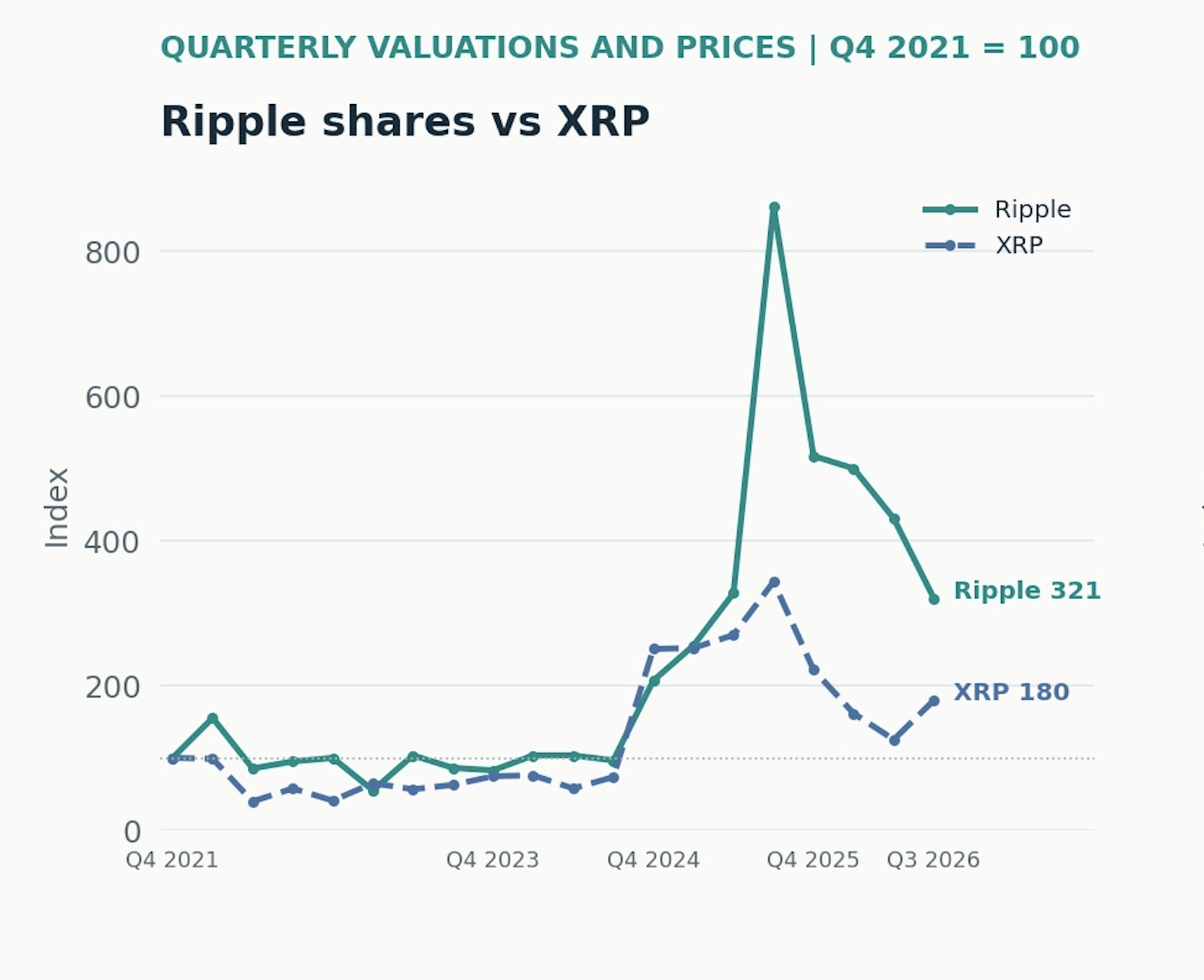
Ripple Stock vs XRP, Kraken vs Bitcoin: The 2027 Outlook
Ripple shares, XRP, Kraken and Bitcoin offer very different exposures. We compare IPO CLUB valuations since 2021, examine recent crypto IPOs, and map the regulation, interest-rate and business signals to watch in 2027.

Who Launches After SpaceX
SpaceX has stopped taking rideshare bookings beyond 2028. We map who can carry small satellites next, split between listed companies and private ones, by price per kilogram, flight record and valuation.

Fund II (America 2030) Q3 2026 Update
America 2030 is IPO CLUB's late-stage private markets fund backing Series B companies in Defense, Energy, AI Infrastructure, Robotics, Critical Minerals and Space.

The New Missile Makers: Castelion, Anduril and Covenant
A new group of venture-backed companies builds missiles for a fraction of legacy costs. Who they are, what they cost, what they are worth, and how investors get exposure.

Inside IPO CLUB Membership: Research & Deal Access
Take a visual tour of the IPO CLUB Data Room, including 132 company profiles, sector research, Club Letters and live private-market opportunities.

SMR Q3 2026 Update
Four advanced reactors reached criticality under the U.S. Department of Energy (DOE) Reactor Pilot Program between June and July 2026, exceeding Executive Order 14301's mandate. IPO CLUB Research tracks the milestones, Antares, Valar Atomics, Deployable Energy, Aalo Atomics, and the capital wave that followed, including X-energy's IPO and prospected newcleo SPAC merger. We explain what zero-power criticality proves, what it does not, and why no SMR is yet selling commercial power.
Fund II (America 2030) Q2 2026 Update
America 2030 is IPO CLUB's late-stage private markets fund backing Series B companies in Defense, Energy, AI Infrastructure, Robotics, Critical Minerals and Space.

What IPO CLUB Invests In and Why
IPO CLUB is a private-market investment manager focused on late-stage U.S. private companies in defense, AI infrastructure, energy, and technology. Here is how we select positions and why.

Blue Origin: can capital plus time fix execution?
Blue Origin is weighing the first outside capital in its twenty-five-year history, and after the SpaceX IPO it is the name the market expects to chase next. The pull is understandable: a generously funded founder, real hardware, a sector re-rating in real time. But the company that reached orbit and landed a booster is also the company that lost a rocket and its only operational pad inside the same year, with no published revenue to anchor any of it. The momentum case writes itself. The harder question is the one underneath it, and it does not have an answer yet: can capital plus time fix execution, or is that exactly what the last twenty-five years were supposed to do?

Picking Up the MUSV Leftovers
Autonomous surface vessels are the fastest-moving procurement story in maritime defense. The U.S. Navy wants uncrewed boats, in numbers, and quickly, and it has just restructured how it buys them. In late May it named seven builders to an at-sea demonstration of medium unmanned surface vessels (MUSVs), the culmination of a procurement overhaul backed by billions in committed funding.