
Star Catcher
This company is in the pipeline of America 2030, IPO CLUB’s short-term, actively managed secondary fund focused on U.S. defense, energy, security, and AI.
Updated in September 2026
Star Catcher is a private company based in Jacksonville, Florida. It has no stock ticker and has not announced an IPO. Its latest round was a $65 million Series A in May 2026, bringing total funding to about $88 million.
Headquarter: Jacksonville, Florida, USA
Year Founded: 2024
Leadership: Andrew Rush
Industry Sectors: Space
Funding Round: Series A ($65M, May 2026) — led by B Capital, Shield Capital, Cerberus Ventures
Total Funding: $88M
Valuation: n/a
Is Star Catcher A Public Company? No, it’s currently private
What Is Star Catcher?
Star Catcher Industries is a Jacksonville, Florida–based space infrastructure company founded in 2024 by Andrew Rush, Michael Snyder, and Bryan Lyandvert to eliminate power constraints in orbit through the creation of the Star Catcher Network, the first space-based energy grid transmitting concentrated solar power directly to satellites. Its mission is to unlock a fully electrified orbital economy by providing scalable, on-demand power to spacecraft in LEO and beyond.
Technology & Products
Star Catcher’s flagship product is the Star Catcher Network, an orbital power grid composed of modular Power Nodes that collect solar energy and wirelessly transmit it to satellites’ existing solar arrays with no hardware modifications. These nodes deliver up to 150 kW per satellite, achieve 2–10× flux concentration, operate at 900–1,500 km, and support transmission distances exceeding 100 km. The system uses proprietary optical power beaming combining Fresnel-lens concentration, multi-wavelength lasers optimized for triple-junction cells, autonomous high-precision tracking, and fault-tolerant safety systems. Star Catcher commercializes this capability through Power Purchase Agreements, subscriptions, and on-demand power access enabling high-power missions in remote sensing, telecom, AI compute, national security, constellation life extension, and lunar surface operation.
Market Opportunity
The company addresses rapidly growing power demand across LEO, where the satellite population is expected to reach 40,000+ by 2030 and next-generation missions require 5–10× more power for AI, high-resolution sensing, and direct-to-cell connectivity. Star Catcher positions its orbital power grid as essential shared infrastructure, estimating 840 MW of required generation capacity to serve the projected market. Primary sectors include commercial and defense satellite operators, telecommunications, remote sensing, space stations, and lunar/cislunar operations, with emerging opportunities in space-based AI compute, in-space manufacturing, and lunar power delivery.
Competitive Landscape
Star Catcher competes in the emerging space-to-space power-beaming sector and distinguishes itself by requiring no retrofit hardware on client satellites, unlike laser and microwave competitors. Peer companies such as Aetherflux, Reflect Orbital, Space Power (UK), and PowerLight Technologies focus mainly on space-to-Earth or terrestrial applications, positioning Star Catcher as the first mover in orbital utility infrastructure. Advantages include a proven founding team with prior exit success, commercial validation through PPAs and LOIs, record-setting demonstrations achieved with only $12.25M seed funding, and a differentiated utility model. Potential threats include competitive convergence from defense programs, vertical integration by major constellation operators, and evolving regulatory frameworks for wireless power transmission.
How To Buy Star Catcher Stock?
Star Catcher is currently a private company and is not publicly traded on major stock exchanges like the NASDAQ or NYSE. This means you can buy shares through a pre-IPO platform or brokerage like IPO CLUB by becoming a FREE MEMBER.
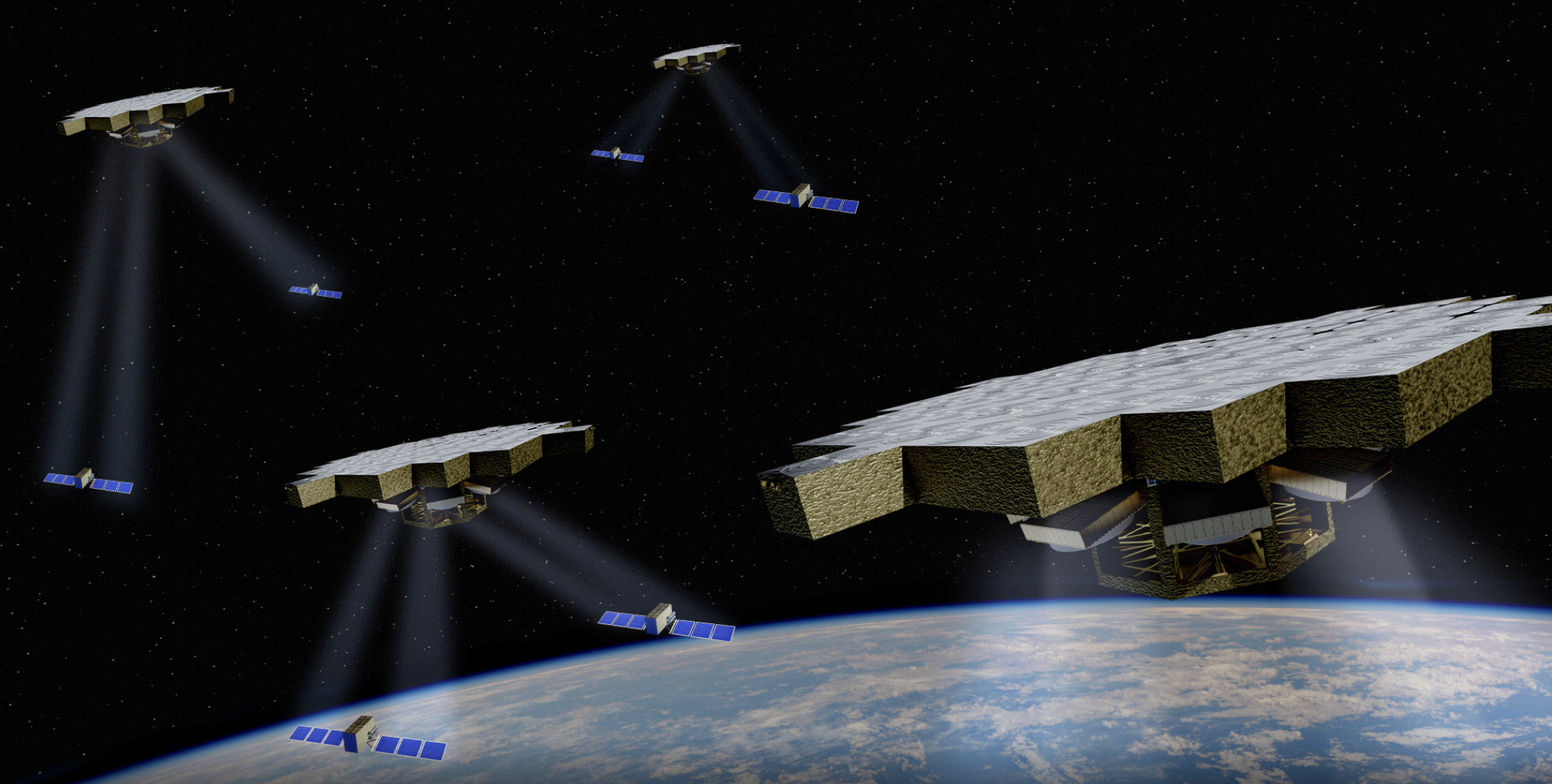
Star Catcher Network
This company is in the pipeline of America 2030, IPO CLUB’s short-term, actively managed secondary fund focused on U.S. defense, energy, security, and AI.
Access the Data Room for valuation data, live deals, investment memos, IPO insights, sector reports, and newsletter archive.
FAQ
Last updated:
How can I invest in Star Catcher pre-IPO through IPO CLUB?
Star Catcher access on IPO CLUB is typically offered to accredited investors via curated secondary allocations, including the America 2030 Fund and Single-Name SPVs.
- You need to qualify as an accredited investor to participate.
- Availability depends on secondary supply and seller willingness.
- Access is provided through the America 2030 Fund or Single-Name SPVs.
Do you currently have access to Star Catcher shares?
Star Catcher availability on IPO CLUB can change and is generally limited to Single-Name SPVs.
- To check if Star Catcher is currently on offer, register or log in to the IPO CLUB membership area and open Live Deals.
- Secondary allocations may open or close depending on seller participation.
- Access is provided through the America 2030 Fund or Single-Name SPVs.
Is Star Catcher publicly traded, and does it have a stock ticker?
No. Star Catcher is a private company, so it has no stock ticker, no stock symbol and no public share price.
- There is no public-market quote or ticker for Star Catcher.
- Transactions, if available, are generally secondary and may be illiquid.
- Access is provided through the America 2030 Fund or Single-Name SPVs.
When is the Star Catcher IPO?
Star Catcher has not announced an IPO or a listing date.
- No IPO date is guaranteed or required for a secondary allocation.
- Timing can depend on market conditions and company decisions.
- Access is provided through the America 2030 Fund or Single-Name SPVs.
What security types are typically used for Star Catcher transactions on IPO CLUB?
Star Catcher exposure on IPO CLUB is typically provided to accredited investors through structured vehicles such as the America 2030 Fund and Single-Name SPVs used for curated secondary allocations.
- Single-Name SPVs are commonly used to pool investor participation.
- Member exposure is to an interest in the relevant vehicle, not necessarily direct shares.
- Final structure can vary by allocation and seller terms.
What are the risks of buying Star Catcher pre-IPO shares?
Star Catcher pre-IPO investing can be illiquid and high-risk, and IPO CLUB access is limited to accredited investors via curated secondary allocations through the America 2030 Fund and Single-Name SPVs.
- Liquidity risk: you may not be able to sell quickly or at a desired price.
- Execution risk: transfers can be delayed or blocked by restrictions.
- Timing risk: there may be no IPO or liquidity event on a predictable schedule.
Why might a Star Catcher allocation not be confirmed?
Star Catcher allocations can fail to confirm due to limited secondary supply, transfer restrictions, or changing seller terms.
- Supply can be oversubscribed or withdrawn by sellers.
- Transfer approvals or documentation issues can prevent closing.
- Allocation sizing can change based on final secondary availability.
Star Catcher and America 2030 Latest News


Read IPO CLUB’s Space research.
More in Space: Loft Orbital, Blue Origin, Varda and CesiumAstro. See the Space sector overview.
Sources:
PR Newswire / Star Catcher, "Star Catcher Raises $65 Million to Build the First Power Grid in Space" (May 12, 2026):
SpaceNews, "Star Catcher raises $65 million for space power grid" (May 2026):
Space.com, "Star Catcher just raised $65 million to build the world's first power grid in space — with lasers" (May 2026):
PR Newswire / Star Catcher, "Star Catcher Closes $12.25M Seed Round to Transform Space Operations With World's First Space-Based Energy Grid" (2024):
Star Catcher / PR Newswire, "Record-Breaking Optical Power Beaming Proves Path to Scalable Power Grid for Space" (November 2025):
Bloomberg, "Space Startup Beams More Laser Energy to Panels Than Ever Before" (November 4, 2025):
Via Satellite, "Andrew Rush's New Venture Star Catcher Looks to Boost the Power of Satellites in LEO" (July 26, 2024):
