
Picking Up the MUSV Leftovers
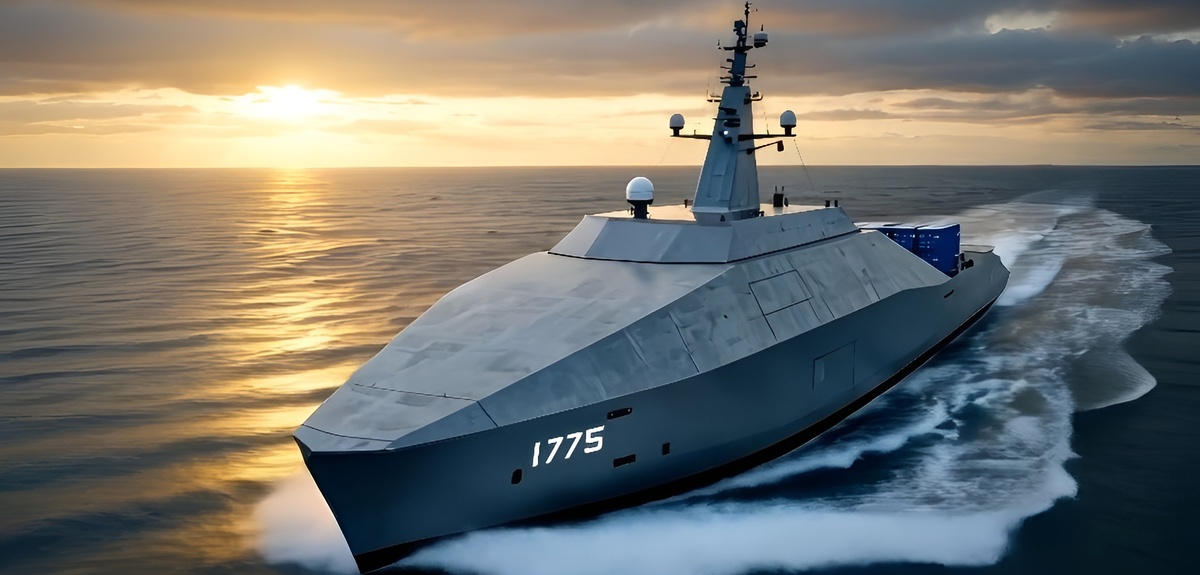
Read the full ASV market map
This piece is the short version. The full research report maps the entire autonomous surface vessel landscape, every builder, platform, and the procurement engine driving the market, with the analysis and exhibits behind each conclusion.
- Three positioning maps: size and reach, the propulsion tradeoff, and capital intensity by scale
- The U.S. Navy MUSV program, the seven-name down-select, and where the funding comes from
- Full builder profiles across pure-plays, public small-caps, and primes
- How allied builders enter U.S. programs, and the access constraint that governs it all
The full report sits in the Sector Reports library. Register or log in as a Free Member to read it.
Accredited investors only.
Access the full reportThe setup
Autonomous surface vessels are the fastest-moving procurement story in maritime defense. The U.S. Navy wants uncrewed boats, in numbers, and quickly, and it has just restructured how it buys them. In late May it named seven builders to an at-sea demonstration of medium unmanned surface vessels (MUSVs), the culmination of a procurement overhaul backed by billions in committed funding.
That down-select is the single most important sorting event the sector has had. It also created an opportunity that the headlines missed, which is the subject of this note.
Why the sector, why now
Three forces are converging. First, the lessons of the Black Sea and the Red Sea: cheap, autonomous boats have sunk and suppressed billion-dollar crewed warships, and every serious navy has taken note. Second, a U.S. doctrine shift. The Chief of Naval Operations' Hedge Strategy explicitly calls for distributing capability across large numbers of unmanned, attritable platforms rather than concentrating it in a few exquisite hulls. Third, the Indo-Pacific math: defending contested waters demands persistent presence at a cost per vessel the Navy can actually afford to lose.
Independent market estimates for unmanned surface vessels vary by methodology, but the direction is uniform: a sector growing at double-digit rates through 2030, with defense the dominant and fastest-moving share. The relevant signal for us is not the precise market-size figure; it is that a single U.S. procurement line just put billions of committed dollars behind production, not research.
The program in brief
In March 2026 the Navy cancelled MASC, its prototype-led Modular Attack Surface Craft effort, and replaced it with a recurring MUSV “marketplace.” The logic: enough capable boats already exist that the Navy can skip prototyping and buy mission-ready vessels, deliberately courting smaller, non-traditional shipyards rather than the legacy primes.
The performance bar is demanding: travel 2,500 nautical miles at 25 knots carrying a 25-ton payload (two 40-foot containers) in sea state 4, operate fully autonomously day and night, and run with all radio-frequency emissions suppressed. More than two dozen designs were submitted; seven advanced to at-sea testing that runs through October 2026. Vessels that pass earn a 15-million-dollar award and become eligible for follow-on production, with the Navy aiming to field five to ten operational MUSVs in fiscal 2027 and to repeat the marketplace for other vessel classes thereafter.
Where the money comes from
This is not a research line that may or may not mature. The funding is appropriated and committed. The July 2025 reconciliation law (the “One Big Beautiful Bill Act”) appropriated 2.1 billion dollars specifically for medium unmanned surface vessels, within a broader pool of roughly 5 billion dollars the Navy is using for marketplace contracting of unmanned systems. Under its May 2026 shipbuilding plan the Navy intends to buy 36 medium vessels in fiscal 2026 and dozens more across the following five years. For an early-stage builder, a recurring government buyer with billions already allocated is the rarest thing in venture: demand that is visible, funded, and scheduled.
The idea: buy the boats the Navy didn't pick
Capital and attention have rushed to the seven selected names, compressing entry prices at the top of the market. The category leader now carries a roughly 9 billion dollar valuation, which makes it a strong business but a difficult place to generate venture-scale returns from here.
The more interesting question is who was left off the list for reasons of timing and procurement lane rather than merit, and whether a second wave (a follow-on Navy buy, allied navies, or the next marketplace round) re-rates them from today's far lower entry points. We believe it does. The leftovers are where the protein is.
We have identified three builders that fit this read. America 2030 intends to take core positions where access allows, and to offer qualified investors curated co-investment SPVs alongside the fund in the one or two names where additional capacity is warranted.
Three candidates
Profiles below reflect the best information available to us and are targets we are actively working. Allocation in any name is contingent on a confirmed path to the cap table.
Blue Water Autonomy THE PROGRAM-OF-RECORD PLAY
Boston, MA · Series A (GV-led), early-stage entry · backed by GV, Eclipse, Riot
What they are. Builder of large, open-ocean autonomous naval vessels. Its 190-foot Liberty Class, designed with Damen Shipyards, is under construction at a Louisiana yard with a first U.S. Navy delivery expected this year under a program of record.
Why now. A genuine MUSV-class vessel that sat out the marketplace competition while pursuing its own program path. Early-stage entry valuation against a vessel already in build gives this the cleanest risk-reward of the three.
MARTAC THE DEPLOYED INCUMBENT
Melbourne, FL · operationally fielded, pre-priced-round entry · founded 2012
What they are. Maker of the MANTAS and Devil Ray families of high-speed autonomous surface vessels, in operational use supporting U.S. and allied forces from Europe to the South China Sea, with an 82-foot next-generation platform in development.
Why now. A decade of deployed operating history and a separate Joint Staff program win, in a different procurement lane than the marketplace. A new composite-hull production partnership signals a scale-up. Mature technology at an entry point the selected names no longer offer.
Seasats THE SMALL-VESSEL COMPLEMENT
San Diego, CA · Series A (Konvoy-led), early-stage entry · over 100M dollars in U.S. government contracts
What they are. Builder of small, low-cost, long-endurance autonomous surface vessels (Lightfish, Quickfish, Heavyfish). Solar-electric endurance platforms that ship in volume and deploy by hand.
Why now. Not a medium-USV competitor, and we do not present it as one. It is the affordable, high-volume complement to the thesis: in May a Lightfish completed the first autonomous transit of the Taiwan Strait, monitoring Chinese warships. Proven, attritable, and priced for scale.
How the co-investment would work
– America 2030 takes the core position. Co-investors participate through a dedicated SPV, on the fund's direct cap-table terms, with no stacked broker fees where avoidable.
– We expect to open one, possibly two, of the three names for co-investment, sized to available primary or secondary capacity.
– Access is the gating condition. We commit capital where a path to the cap table is confirmed, or through a managed vehicle where that is the only available route; this note is an indication of interest, not a closed allocation.
– Target check sizes and terms shared on a per-deal basis with qualified, accredited participants.
Disclaimer
Private companies carry inherent risks and may not be suitable for all investors. The information provided in this article is for informational purposes only and should not be construed as investment advice. Always conduct thorough research and seek professional financial guidance before making investment decisions.
IPO CLUB Research
The full research lives inside the Data Room
Company deep dives, quarterly valuations, and live allocations across Defense, Energy, AI Infrastructure, Robotics, Critical Minerals, and Space. Membership is free.
Enter the Data Room → For accredited investors